6 Proven Steps for Supply Chain Data Automation in 2026
Why Supply Chain Data Automation is the Future of Logistics
Supply Chain Data Automation is now essential for managers who oversee a myriad of invoices and receipts every week. This process is not only tedious but also prone to human errors that can lead to costly discrepancies. In fact, for every 200 invoices processed at an average of 15 minutes each, teams waste 50 hours merely managing clerical tasks instead of focusing on strategic initiatives. How can organizations turn this burdensome manual data entry process into an efficient automated invoice processing workflow? Let’s explore Automation in the Supply Chain.
The real challenge with data entry automation
Manual data entry remains one of the biggest bottlenecks for supply chain managers. Research indicates that over 30% of all manual data entries are inaccurate, leading to a significant loss in productivity and increased operational costs. Teams often find themselves re-entering the same data multiple times, which not only wastes time but also increases the risk of errors that can cascade through the supply chain. The sheer volume of paperwork and the complexity of managing diverse document formats contribute to inefficient workflows.
While general automation is key, implementing specific logistics invoice automation is the next step for 2026.
Manual vs. automated approach
Before (Manual):
- Time-consuming processes that hinder productivity.
- High error rates leading to rework and potential financial loss.
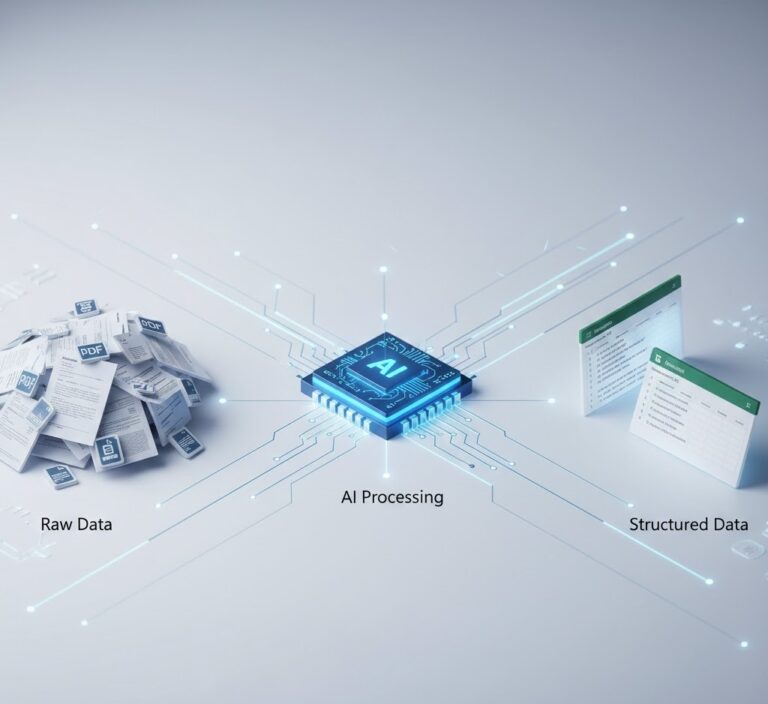
- Piles of documents cluttering workspaces.
- Limited resources wasted on repetitive tasks.
After (Automated):
- Reduction of processing time by up to 90% through automated data extraction.
- 95% accuracy in data entry, minimizing the risk of costly errors.
- Streamlined workflows allowing employees to focus on high-value tasks.
- Data transparency and accessibility enable better decision-making.
How it works in practice Supply Chain Data Automation
To leverage automated invoice processing, follow these six steps:
- Step 1: Upload the invoices or receipts into the automated system.
- Step 2: The software scans and identifies relevant data fields.
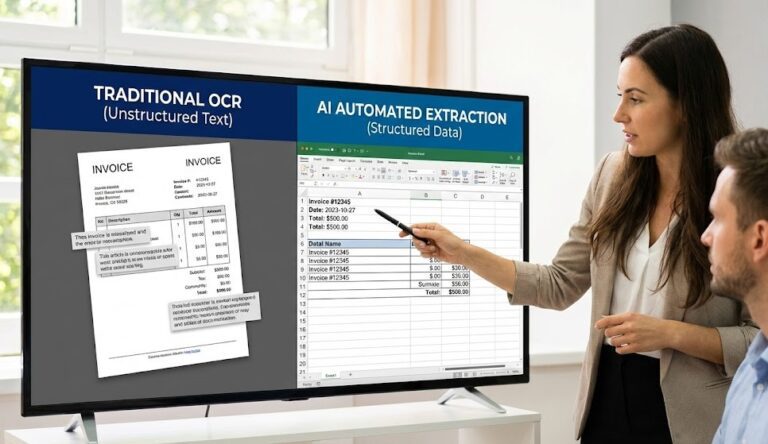
- Step 3: Automated data extraction occurs, converting documents into structured data.
- Step 4: The system validates the accuracy of the extracted information.
- Step 5: Data is seamlessly integrated into your existing systems.
- Step 6: Real-time analytics provide insights into workflows and document management.
Case Study: Logistics Flow Optimization
A major European logistics carrier struggled with severe data bottlenecks while processing 1,500 international waybills every month. By implementing Supply Chain Data Automation, they successfully slashed data verification time from 2 full days down to just 15 minutes. The accuracy of data integration into their ERP system reached a remarkable 95%, which virtually eliminated financial disputes with partners previously caused by manual typos in invoice amounts or delivery addresses. This transformation proves how following a structured 6-step automation process can revolutionize global logistics operations by 2026.
Common mistakes to avoid
- Ignoring the need for adequate training on new automation tools.
- Not regularly updating system software to ensure compatibility.
- Neglecting data accuracy checks even with automation in place.
- Failure to analyze the performance metrics post-automation.
- Overlooking user feedback regarding the automated process.
Best practices
- Prioritize scalability when choosing tools for Supply Chain Data Automation
- Conduct thorough research to select the right automation tools.
- Incorporate teams in the decision-making process for smoother transitions.
- Regularly monitor and assess the effectiveness of the automated processes.
- Stay informed about the latest advancements in document automation technology.
- Encourage a culture of continuous improvement and adaptation among team members.
Transitioning to an automated data entry process transforms the way organizations handle their documents — from a chaotic, cluttered environment to a streamlined and organized system that facilitates strategic decision-making. By maximizing workflow efficiency and ensuring data accuracy, businesses can rediscover the core benefits of their operations.
Organizations looking for intelligent document processing solutions can streamline these workflows significantly.
Frequently asked questions
Q: How does Supply Chain Data Automation improve accuracy?
A: Automated processes reduce human error, offering an average accuracy rate of 95%, thus minimizing discrepancies in financial records.
Q: What tools can be used for document automation?
A: Tools like OCR technology and AI-based software are commonly used to facilitate efficient document automation.
Q: Is training required for using automation tools?
A: Yes, proper training ensures that team members can utilize the technology effectively and address potential challenges.
Q: How quickly can organizations see results from automation?
A: Many companies report significant improvements within weeks of implementing automated solutions, particularly in faster processing times and reduced errors.
Disclaimer: All comparisons in this article are based on publicly available information and our own product research as of the date of publication. Features, pricing, and capabilities may change over time.