Why Use API for Data Integration? The Best 2026 Guide for Finance
Imagine your finance team is a high-speed train. Manual data entry is like laying the tracks right in front of the moving locomotive – one mistake, and everything derails. In the modern digital economy, businesses cannot afford to rely on static spreadsheets sent via email. This is where Application Programming Interfaces (APIs) come in. But why use api for data specifically?
The answer lies in the shift from “static” to “dynamic” operations. While a CSV file is a snapshot of the past, an API is a live feed of the present. This article explores why use api for data integration is the single most effective decision for scaling your financial operations in 2026, supported by technical insights and real-world ROI.
Table of Contents
- 1. The Connectivity Crisis: Why CSV Fails
- 2. What Is an API? (In Plain English)
- 3. Reason #1: Speed and Real-Time Access
- 4. Reason #2: Superior Security and Compliance
- 5. Reason #3: Eliminating Human Error
- 6. Reason #4: Scalability on Demand
- 7. How to Implement API Pipelines
Comparison: Why Use API for Data vs. Manual Uploads
| Feature | Manual (CSV/Email) | Automated (API) |
|---|---|---|
| Data Freshness | Delayed (Hours/Days) | Real-Time (Seconds) |
| Security | Low (Email attachments) | High (Encrypted Tokens) |
| Scalability | Linear (More staff needed) | Exponential (Auto-scaling) |
| Error Risk | High (Copy-paste errors) | Near Zero |
1. The Connectivity Crisis: Why CSV Fails
Before understanding why use api for data, look at the alternative. Most companies still rely on “Swivel Chair Integration” – downloading a report from one system, swiveling around, and uploading it to another. According to the MuleSoft Connectivity Benchmark Report, the average enterprise has over 900 applications, but only 29% are integrated.
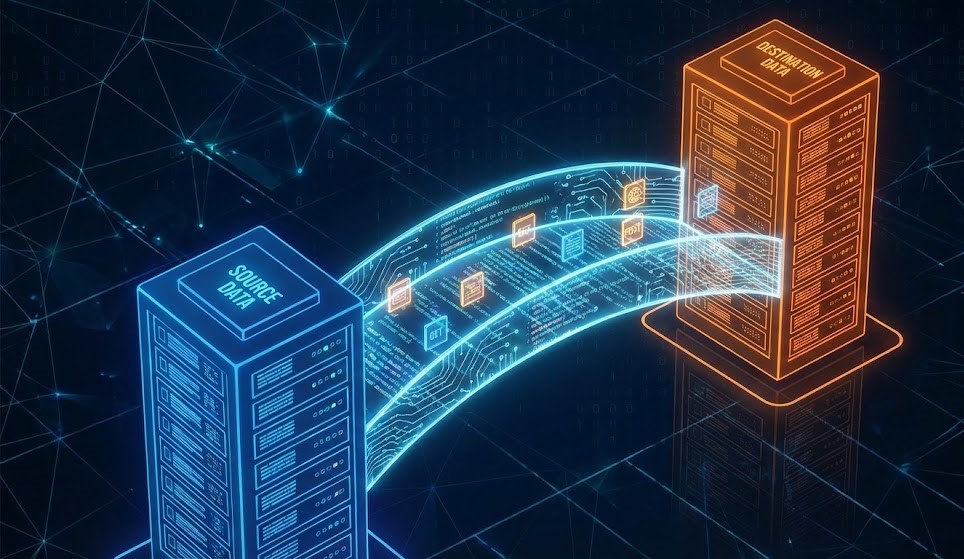
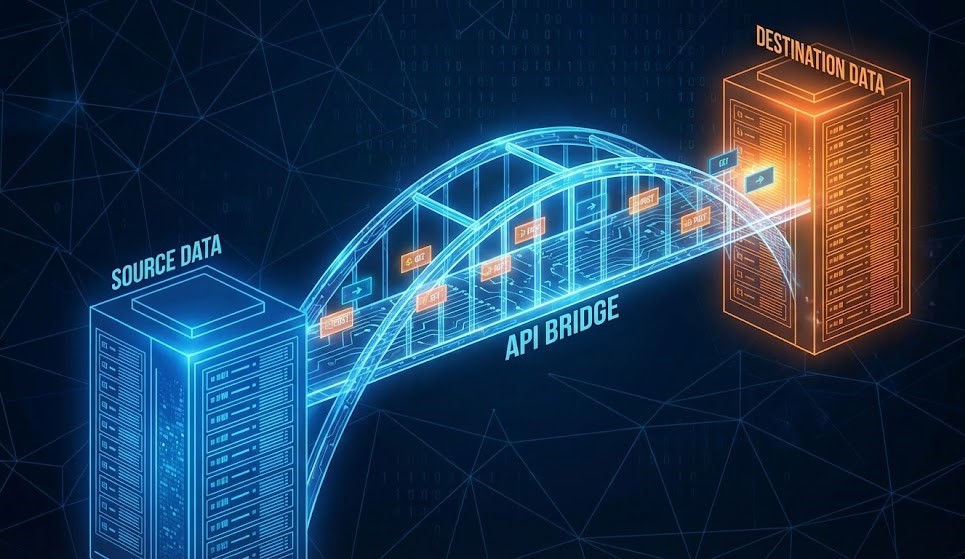
This fragmentation leads to “Data Silos.” Your sales data is in Salesforce, your invoices are in a PDF folder, and your ledger is in QuickBooks. Without an API bridge, these systems are isolated islands. The primary reason why use api for data tasks is to connect these islands into a single continent of information.
2. What Is an API? (In Plain English)
Think of an API (Application Programming Interface) as a waiter in a restaurant. You (the user) are at the table. The kitchen (the database) is in the back.
- You don’t go into the kitchen to cook (direct database access).
- You hand your order to the waiter (API Request).
- The waiter brings you the food (API Response).
When asking why use api for data extraction, you are essentially asking: “Why have a waiter instead of cooking it myself?” The answer is efficiency and protocol. The API ensures you get exactly what you asked for, formatted correctly, without messing up the kitchen’s operations.
3. Reason #1: Speed and Real-Time Access
In finance, timing is everything. Currency rates fluctuate, stock levels change, and payment deadlines approach. If you are uploading CSVs once a week, you are making decisions based on old news. The most compelling argument for why use api for data synchronization is the capability for real-time updates.
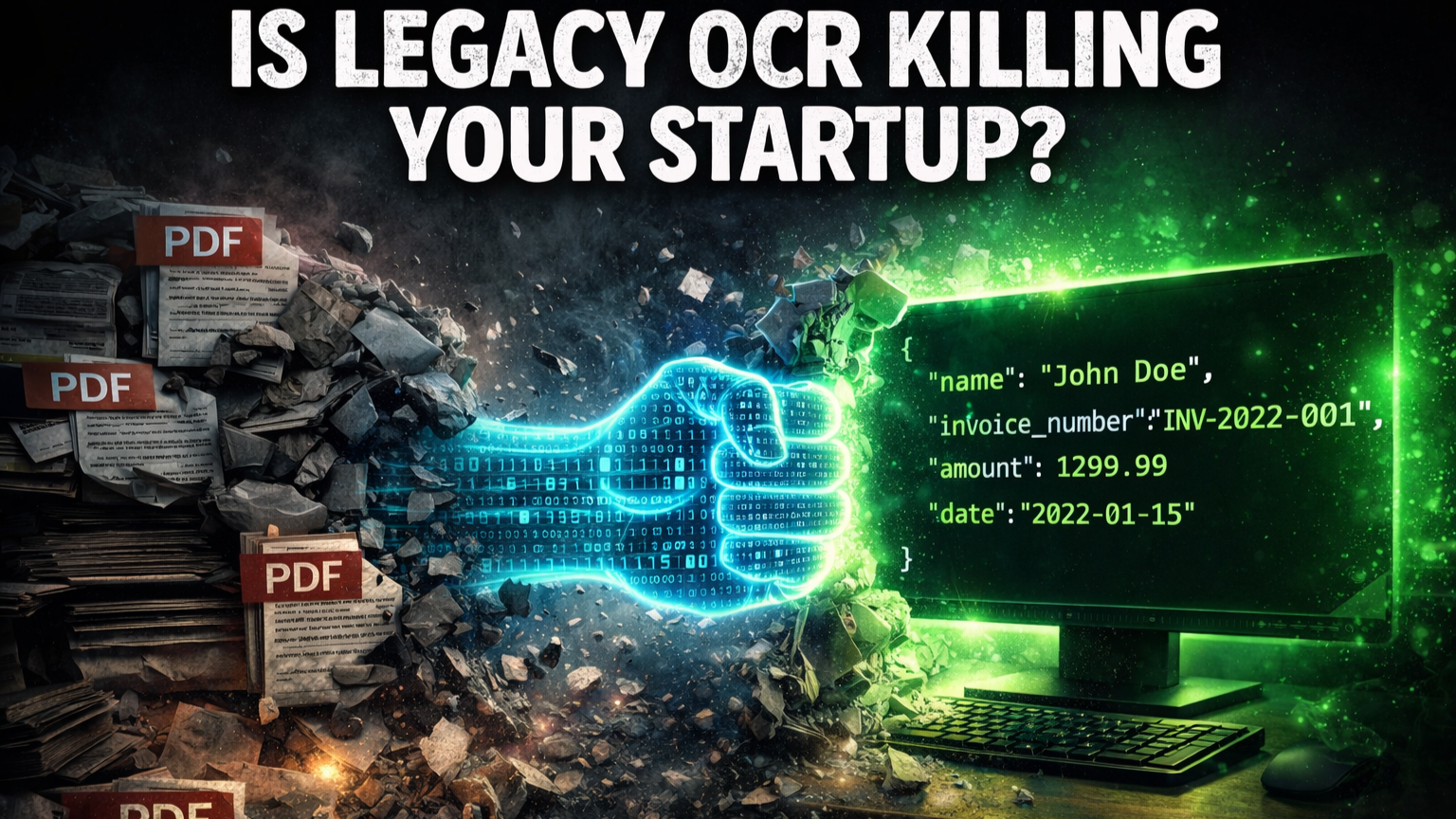
Modern APIs support “Webhooks.” Instead of asking “Is there new data?” every minute (polling), the system instantly pushes data the moment an event happens. For example, the second a PDF invoice arrives in ParserData, the API triggers a workflow to extract the data and update your Excel sheet instantly.
Integrating financial data doesn’t have to be painful. Watch how our API handles document extraction instantly 👇
4. Reason #2: Superior Security and Compliance
Emailing spreadsheets is a massive security risk. Attachments can be forwarded to the wrong person, downloaded to personal devices, or intercepted. When you analyze why use api for data transfer, security is often the deciding factor for CTOs.
APIs use industry-standard encryption protocols like TLS 1.3 and authentication methods like OAuth2. Red Hat emphasizes that API gateways provide a controlled entry point, allowing you to revoke access tokens instantly if a breach is suspected – something impossible to do with a file already emailed.
5. Reason #3: Eliminating Human Error
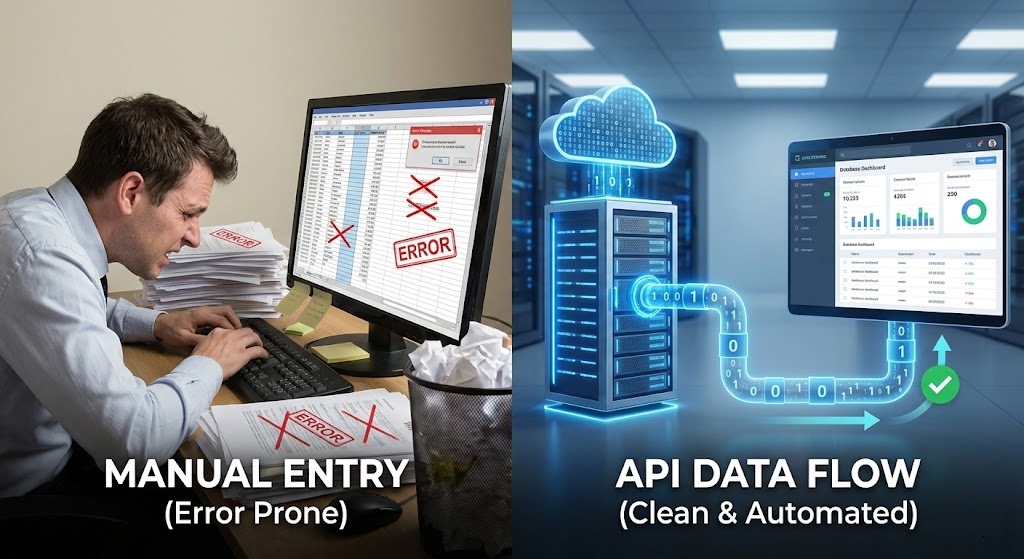
Humans are terrible at repetitive tasks. Research shows that manual data entry has an error rate of about 1-4%. In a dataset of 10,000 numbers, that is 400 mistakes. This is a key reason why use api for data pipelines.
Machines do not get tired, distracted, or bored. An API pipeline configured to map “Invoice Total” to “Column D” will do it correctly the first time and the millionth time. This consistency is vital for automation best practices in accounting.
6. Reason #4: Scalability on Demand
Growth breaks manual processes. Hiring more clerks to type data into Excel is not a scalable strategy; it has diminishing returns. Conversely, why use api for data scaling? Because APIs decouple growth from headcount.
Whether you process 50 invoices a month or 5,000, the API infrastructure handles the load seamlessly. As noted by McKinsey, companies that leverage the “API Economy” can enter new markets faster because their backend systems are modular and adaptable.
7. How to Implement API Pipelines
You might think, “I don’t have developers.” That is no longer a barrier. The rise of Low-Code platforms means you can leverage API benefits without writing code. This is the practical answer to why use api for data for small businesses.
Tools like ParserData connect directly to platforms like n8n, Make, or Zapier. You can drag and drop modules to create a flow: “When PDF arrives -> Extract Data -> Send via API to Google Sheets.”
We have built a template to prove how easy this is.
🚀 Download Free n8n Workflow Template
Conclusion
The question is no longer why use api for data integration, but rather when you will make the switch. Sticking to manual uploads in 2026 is a competitive disadvantage. APIs offer the speed, security, and accuracy required to run a modern finance operation.
Start small. Automate one document flow today using ParserData and experience the power of connectivity firsthand.
Frequently Asked Questions
What makes API better than manual file uploads?
API allows for real-time data synchronization without human intervention. Unlike file uploads, which are static and prone to version errors, APIs ensure that your systems always reflect the most current data automatically.
Is API integration expensive to set up?
The initial setup might require developer time or a no-code tool subscription, but the long-term ROI is massive. By eliminating manual labor costs and error-related penalties, APIs become the cheaper option within months.
Do I need to know how to code to use APIs?
Not in 2026. Platforms like n8n, Zapier, and Make act as visual “glue,” allowing non-technical users to connect APIs (like ParserData to Google Sheets) using drag-and-drop interfaces.
How does API ensure data security?
APIs use encrypted tokens (OAuth) and HTTPS protocols (TLS 1.3). This means data is encrypted in transit and you control exactly who has access, unlike emailing a CSV file which can be intercepted or forwarded.
Can APIs handle large volumes of financial data?
Yes, APIs are designed for scalability. They can handle thousands of requests per minute (Rate Limits apply), making them suitable for enterprise-level invoice processing or transaction monitoring.
Recommended
- Business Document Automation Explained: The 2026 Guide
- Explaining PDF Data Extraction: The Ultimate Technical Guide
- What Is Data Extraction? The Complete Guide for Finance
- Data Automation Platforms Comparison: Top 4 Picks
Disclaimer: All comparisons in this article are based on publicly available information and our own product research as of the date of publication. Features, pricing, and capabilities may change over time.