Why Integrate Data Analytics? The Ultimate Strategy to Skyrocket Growth (2026)
In the modern digital economy, generating data is no longer the primary challenge for businesses; making sense of it is. Companies are drowning in information generated by CRMs, ERPs, marketing platforms, and unstructured documents like PDF invoices. Yet, despite this wealth of information, executives often find themselves asking a fundamental question: why integrate data analytics into our core operations when we already have basic reporting tools?
According to a comprehensive study by McKinsey & Company, organizations that successfully unify their fragmented data sources are 23 times more likely to acquire customers and 19 times more likely to be profitable. The era of isolated spreadsheets is officially over.
In this deep-dive explainer, we will explore the technical, strategic, and financial reasons why integrate data analytics is the most critical digital transformation initiative for 2026. We will look at how overcoming data silos, leveraging APIs, and utilizing AI-driven data extraction transforms raw numbers into actionable foresight.
Table of Contents
- 1. The Enterprise Crisis: The Cost of Data Silos
- 2. Defining the Concept: What is Data Integration?
- 3. The Top 3 Strategic Reasons to Integrate
- 4. The Ingestion Bottleneck: Dealing with Unstructured Data
- 5. Real-World Case Studies: Integration in Action
- 6. The Technical Architecture: ETL vs. ELT
- 7. Overcoming Implementation Hurdles
- 8. The Future: Predictive and Prescriptive Analytics
1. The Enterprise Crisis: The Cost of Data Silos
To truly understand why integrate data analytics, we must first look at the default state of most growing businesses: the data silo.
A data silo occurs when one department has access to data that is isolated from the rest of the organization. For example:
- Marketing uses HubSpot and has data on lead engagement.
- Sales uses Salesforce and has data on closed deals.
- Finance uses QuickBooks and handles the actual cash flow and PDF invoices.
When the CEO asks a simple question “What is our true Customer Acquisition Cost (CAC) compared to our actual collected revenue?” – panic ensues. Marketing pulls their report, Finance pulls theirs, and the numbers never match.
The Financial Drain
According to the Harvard Business Review, bad data and siloed operations cost the U.S. economy approximately $3.1 trillion per year. When your data is disjointed, your teams spend more time arguing over whose spreadsheet is correct than actually making strategic decisions.
The primary reason why integrate data analytics is to demolish these silos. By bringing all these disparate streams into a single Data Warehouse or Data Lake, you create a “Single Source of Truth.”
2. Defining the Concept: What is Data Integration?
Before executing a strategy, we need to define the terms. When executives ask why integrate data analytics, they are often confusing integration with extraction.
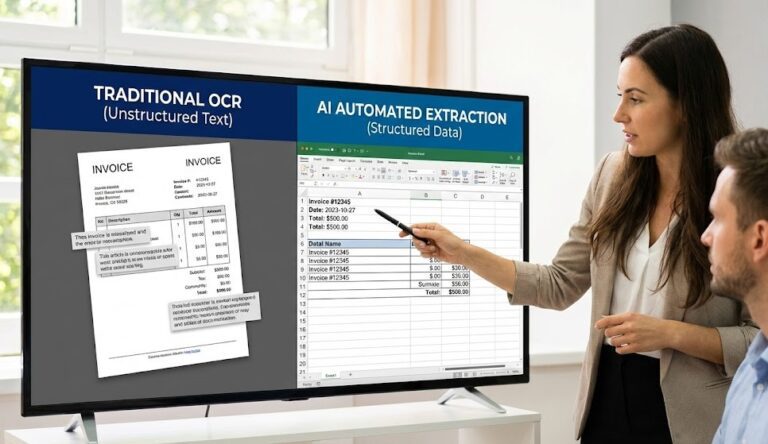
- Data Extraction: The process of pulling raw information from a source. For example, using OCR to read a PDF and grab the “Total Amount Due.” (Learn more in our guide on how to extract data from PDFs).
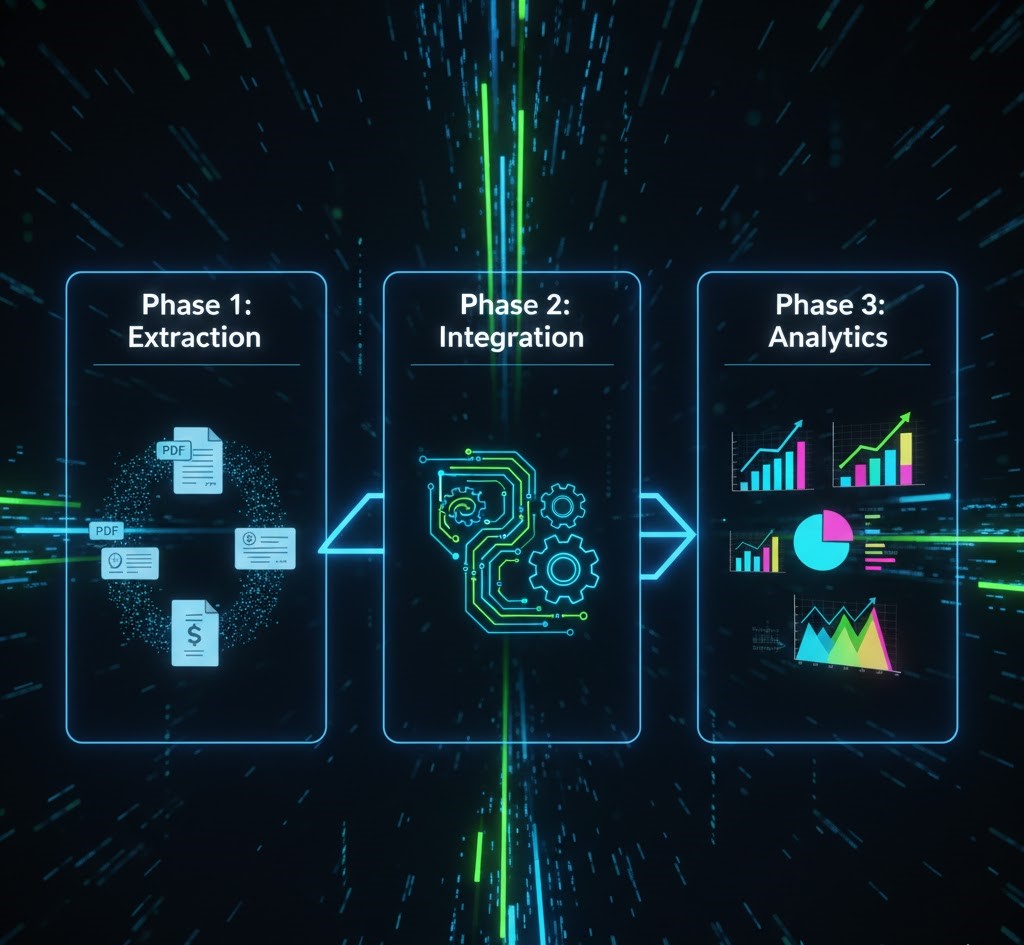
- Data Integration: The complex process of taking that extracted data, cleaning it, transforming it, and combining it with data from other systems (like your CRM or ERP) so it can be analyzed holistically.
- Data Analytics: Applying algorithms, machine learning, and statistical models to the integrated data to discover trends, predict outcomes, and generate business intelligence.
You cannot have effective analytics without successful integration, and you cannot have integration without accurate extraction.
Ready to skyrocket your growth? Watch this full tutorial on automating invoice data into your analytics pipeline 👇

3. The Top 3 Strategic Reasons to Integrate
When building a business case for stakeholders who are asking why integrate data analytics, focus on these three massive drivers of ROI.
Reason 1: The 360-Degree Customer View
In 2026, customers expect hyper-personalized experiences. If a customer has an open support ticket complaining about a software bug, your sales team shouldn’t be calling them to pitch an expensive upgrade.
By integrating data from Customer Service (Zendesk), Product Usage (Internal DB), and Sales (CRM), your analytics engine can instantly flag “At-Risk” customers. This unified view is a primary driver of why integrate data analytics for retention-focused SaaS and retail companies.
Reason 2: Real-Time Operational Agility
The pandemic taught global supply chains a brutal lesson: historical reporting is useless in a fast-changing crisis. If you wait until the end of the month to manually compile supply chain reports, you are already too late.
Integrated analytics provide real-time dashboards. If a container is delayed at a port (Logistics Data), integrated analytics can instantly calculate the financial impact on next month’s revenue (Financial Data) and automatically alert the procurement team to source local alternatives.
Reason 3: Eradicating Manual Reporting Errors
Humans are terrible at copying and pasting data. A 1% error rate might seem acceptable, but if you process 100,000 transactions a month, that is 1,000 corrupted data points.
If you want to know why integrate data analytics, simply calculate the labor hours your team spends building Excel reports every Friday. Integration automates the data flow, meaning your highly-paid analysts spend their time analyzing the data, not preparing it.
4. The Ingestion Bottleneck: Dealing with Unstructured Data
There is a massive roadblock that companies face when they finally understand why integrate data analytics and try to execute: “Dark Data.”
According to Gartner, up to 80% of enterprise data is unstructured. It doesn’t live neatly in SQL databases. It lives in PDF contracts, scanned receipts, email bodies, and vendor invoices.
You Cannot Integrate What You Cannot Read
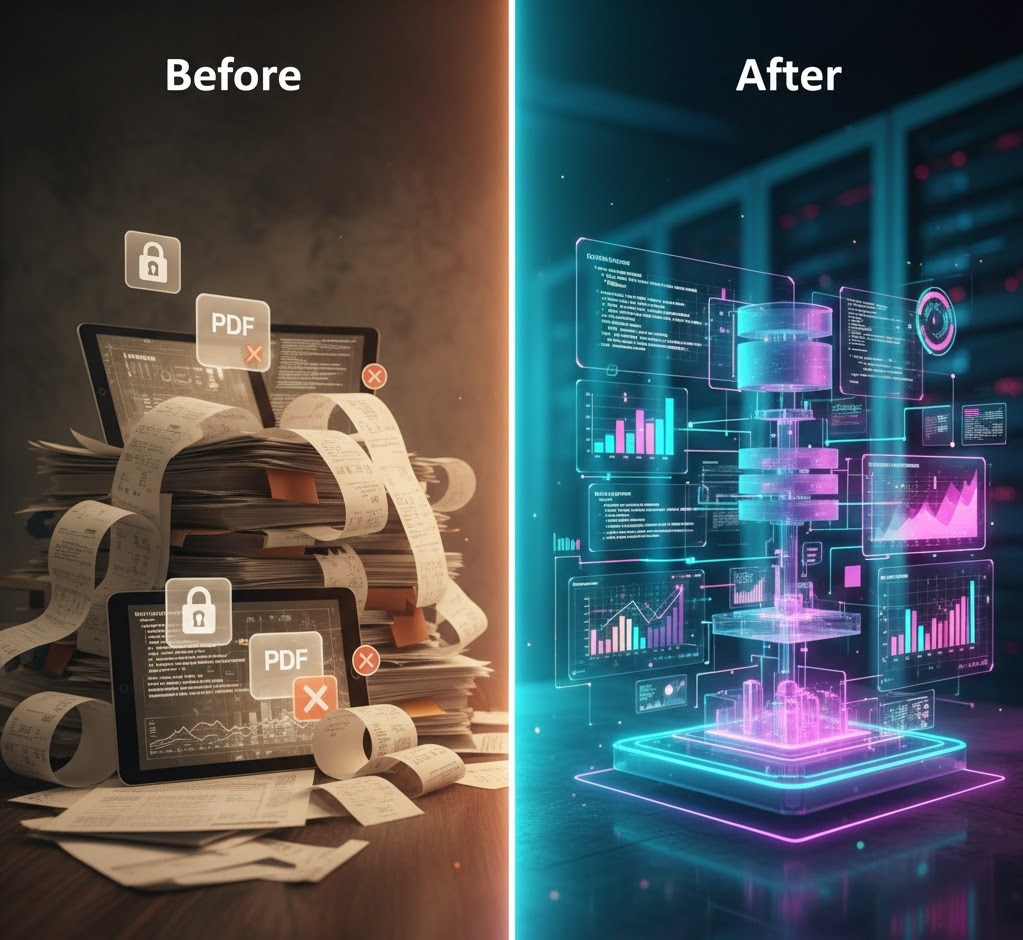
Imagine you want to analyze your supply chain efficiency. You want to integrate your shipping times with your vendor costs. The problem? Your vendor costs are locked inside hundreds of different PDF invoices sent via email.
Before you can push this data into Microsoft Power BI or Tableau, you must structure it. This is where advanced types of financial data extraction come into play.
The ParserData Solution
To solve the ingestion bottleneck, modern companies use AI-driven Cognitive Capture tools like ParserData.
Instead of humans typing invoice details into the ERP, ParserData acts as the bridge. It automatically ingests the unstructured PDF, uses Large Language Models (LLMs) to understand the context, extracts the exact line items, and outputs clean JSON.
Because it operates via API, it feeds directly into your integration pipeline. (Read more about the role of API in automation). By solving the unstructured data problem, ParserData makes true, holistic data integration possible.
5. Real-World Case Studies: Integration in Action
Theory is compelling, but results are what matter. How do industry leaders use integrated data to dominate their markets? Here are two examples illustrating why integrate data analytics.
Case Study 1: Amazon’s Dynamic Pricing
Amazon changes its product prices 2.5 million times a day. How?
- The Integration: They integrate competitor pricing data, historical sales data, inventory levels, and even user browsing behavior into a centralized “Data Lake.”
- The Result: Algorithms adjust prices in real-time to maximize profit margins without losing sales. Without integrated analytics, this speed would be impossible.
Case Study 2: Netflix’s Content Strategy
Netflix doesn’t just guess what movies to produce. They analyze data integration from 260 million users.
- The Insight: By integrating “Pause/Rewind” behavior with “Genre Preferences,” they realized users who liked political dramas also liked Kevin Spacey.
- The Outcome: House of Cards was greenlit without a pilot. This predictive power is a key reason why integrate data analytics into product development.
6. The Technical Architecture: ETL vs. ELT
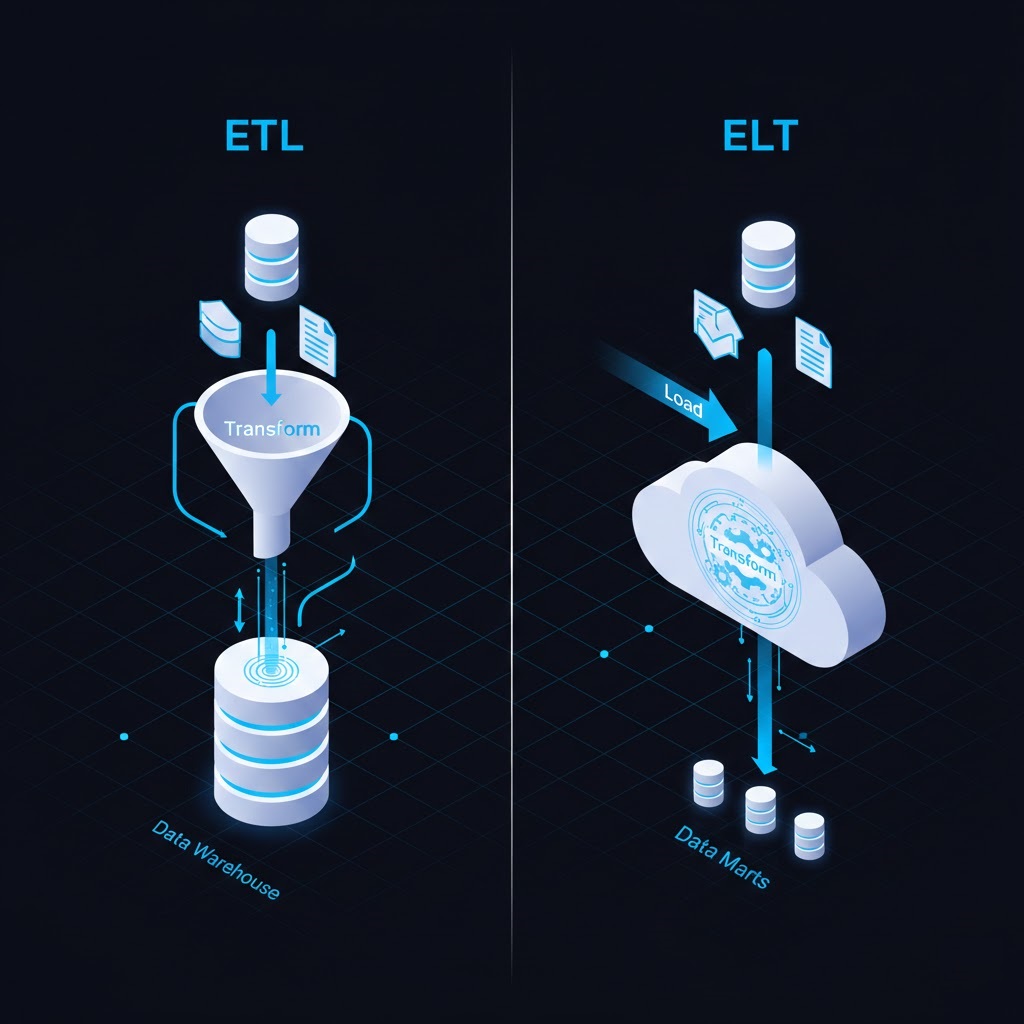
For the CTOs and developers reading this, understanding the architecture is crucial. How do we move data from a PDF invoice to a dashboard? There are two main approaches.
The Classic Approach: ETL (Extract, Transform, Load)
- Extract: Pull data from sources (e.g., using ParserData to scrape a PDF).
- Transform: Clean the data, format dates, calculate totals on a staging server.
- Load: Save the clean data into the Data Warehouse.
The Modern Approach: ELT (Extract, Load, Transform)
Thanks to modern cloud warehouses like Snowflake and BigQuery, we now often flip the process.
- Extract: Use automated tools to pull raw data.
- Load: Dump everything into the cloud immediately.
- Transform: Use SQL to clean and format the data inside the warehouse on-demand.
Why does this matter? ELT is faster and more flexible. But regardless of the method, the first step is always Extraction. If you cannot reliably extract structured data from your business documents, the entire pipeline fails.
7. Overcoming Implementation Hurdles
If the benefits are so clear, why do 60% of data projects fail? When asking why integrate data analytics, you must also ask “What stands in our way?”
1. Data Quality (Garbage In, Garbage Out)
If your extraction tool reads a “5” as an “S”, your analytics will be wrong. High-precision extraction is non-negotiable.
- Solution: Implement validation rules (e.g., checking if
Price * Quantity = Total) before data ever hits your warehouse.
2. Privacy and Compliance
Integrating customer data triggers GDPR and CCPA concerns.
- Solution: Ensure your extraction and integration partners are SOC-2 compliant and offer features like PII Redaction (automatically masking social security numbers or credit card details).
3. The “Black Box” Problem
Stakeholders often don’t trust algorithms they don’t understand.
- Solution: Focus on “Explainable AI.” Use dashboards that allow users to drill down into the source document (e.g., clicking a chart bar to see the original PDF invoice) to verify the data.
Comparison: The Evolution of Data Strategy
Still wondering why integrate data analytics using modern tools instead of traditional methods? This comparison highlights the operational difference.
| Feature | Manual Reporting (Excel) | Point-to-Point (Direct API) | Centralized Integration (Data Warehouse) |
|---|---|---|---|
| Speed | Days/Weeks (Slow) | Real-time | Real-time |
| Scalability | Impossible | Low (Becomes “Spaghetti code”) | Unlimited (Cloud-native) |
| Data Quality | Low (Human errors) | Medium (Siloed logic) | High (Centralized validation) |
| Maintenance Cost | High (Labor hours) | High (Dev maintenance) | Low (Automated pipelines) |
| Business Value | Hindsight (What happened?) | Insight (What is happening?) | Foresight (What will happen?) |
Table: Comparing manual methods vs. centralized integration strategies.
Pro Tips for Seamless Integration
Understanding why integrate data analytics is the first step. Executing it requires tactical precision. Here are three tips to ensure your project delivers ROI in Q1.
💡 Tip 1: The “Thin Slice” Strategy
Do not try to build a massive “Data Lake” overnight. Pick one vertical slice—for example, “Order-to-Cash.” Integrate the Sales (CRM), Fulfillment (ERP), and Invoice (ParserData) data for just this process. Prove the value, then expand.
💡 Tip 2: Treat Data Extraction as an API
Never rely on email attachments. Use tools like ParserData that offer a REST API. This allows your integration platform to “call” for data extraction automatically whenever a new file arrives, removing the human bottleneck entirely.
💡 Tip 3: Define “Done” Before You Start
Before writing a single line of SQL, ask the business stakeholder: “What specific question can you NOT answer today?” If the answer is “Which marketing channel yields the highest LTV customers?”, build your integration specifically to answer that. Focus on the metric, not the mechanic.
8. The Future: Predictive and Prescriptive Analytics
We are currently in the age of Descriptive Analytics (“What happened?”). The reason why integrate data analytics now is to prepare for the next phase: Prescriptive Analytics (“How can we make it happen?”).
- Generative BI: In 2026, you won’t write SQL queries. You will talk to your data. “Hey AI, analyze our vendor invoices from Q3 and tell me where we can negotiate better terms.”
- Autonomous Agents: Integrated systems will not just report on low inventory; they will automatically trigger purchase orders based on supply chain data automation.

Conclusion
The question is no longer why integrate data analytics, but rather: how long can you survive without it?
In a world where speed and precision define market leadership, data silos are an existential threat. Integration turns your organization from a disjointed collection of departments into a unified, intelligent organism. It allows you to see around corners, predict customer needs, and optimize every dollar spent.
But remember: integration starts with ingestion. You cannot analyze data that is locked in “digital paper.” Start by automating your document workflows with ParserData, and build your analytics empire on a foundation of clean, structured data.
Ready to turn your documents into data? Start extracting with ParserData today.
Frequently Asked Questions
Why integrate data analytics into legacy systems?
Legacy systems often trap data. Integrating modern analytics allows you to unlock historical insights, extending the life of your old software while gaining modern predictive capabilities.
How does data integration reduce business risk?
By creating a “Single Source of Truth,” integration eliminates conflicting reports. Everyone makes decisions based on the same verified data, reducing the risk of strategic errors caused by outdated spreadsheets.
What is the ROI of integrating data analytics?
The ROI comes from three areas: reduced labor costs (less manual reporting), increased revenue (better customer targeting), and operational savings (optimized inventory and supply chain).
Do I need a data scientist to integrate analytics?
Not necessarily. With low-code ETL tools and AI extraction platforms like ParserData, operational teams can set up data pipelines without needing heavy engineering resources.
Why integrate data analytics for customer retention?
Integrated analytics provide a 360-degree view of the customer journey, helping you identify at-risk clients and intervene with personalized offers before they churn.
Recommended
- 25 Types of Business Documents to Automate in 2026
- 7 Types of Financial Data Extraction: The Complete Guide
- Role of API in Automation: The Nervous System of Finance
- Data Quality in Automation: The Hidden Key to ROI
Disclaimer: All comparisons in this article are based on publicly available information and our own product research as of the date of publication. Features, pricing, and capabilities may change over time.